Category Archives: Financial Planning

Process, priorities and the thinking behind a sound plan.

Building Your Financial House: Why Financial Planning Is More Than Just Buying Financial Products

Good financial planning in Singapore isn’t about which products you buy — it’s about the order you build things in.

When people think about financial planning, the conversation often revolves around insurance policies, investment portfolios, savings accounts, or retirement plans.

While these are all important, they are not the ultimate goal.

Think of them as building materials.

Bricks, cement, steel and timber are essential for constructing a house—but buying these materials alone doesn’t give you a home. They need to be assembled into a structure that is designed specifically for your family’s needs.

Financial planning works in exactly the same way.

The objective isn’t to accumulate financial products. The objective is to build a financial house that provides security, flexibility and peace of mind throughout your life.


Every Financial House Begins with a Strong Foundation

No architect would begin building a house by installing the roof.

Everything starts with the foundation.

Likewise, every financial plan should begin by ensuring the basics are in place before pursuing wealth accumulation.

Your financial foundation typically consists of:

  • Adequate emergency savings
  • Appropriate insurance protection
  • Good financial habits
  • A realistic budget
  • Basic investments that align with your goals
  • Estate planning essentials, such as making a Will

Without a solid foundation, even substantial wealth can be vulnerable to unexpected events such as illness, disability, job loss or market downturns.

A strong foundation doesn’t eliminate uncertainty—it helps you withstand it.

Not sure how solid your own foundation is right now? Check where you stand financially with a free, private 8-minute review of your net worth, cashflow, and protection gaps.


Your Financial House Should Grow with You

Imagine living in the same one-bedroom house after your family has grown to five.

The house hasn’t become “bad”; it has simply become unsuitable.

Many people make the same mistake with their finances.

They purchase insurance in their twenties and never review it.

They start investing but never adjust their portfolio.

They accumulate savings without asking whether those savings are working efficiently.

Life changes—and your financial plan should change with it.

Major life milestones often require a review of your financial house:

  • Starting your first career
  • Getting married
  • Purchasing a home
  • Having children
  • Receiving a promotion or salary increase
  • Starting a business
  • Caring for ageing parents
  • Approaching retirement

Each milestone brings new responsibilities, opportunities and risks.

A financial plan that served you well five years ago may no longer be appropriate today.


Building Materials Are Not the House

One of the biggest misconceptions about financial planning is believing that buying more financial products automatically means better planning.

Owning five insurance policies doesn’t necessarily mean you’re well protected.

Having multiple investment accounts doesn’t necessarily mean your investments are aligned with your goals.

Large cash balances don’t always represent financial security if inflation is quietly eroding their purchasing power.

Each financial product should have a clear purpose.

For example:

  • Insurance protects against risks that could derail your financial future.
  • Savings provide liquidity for emergencies and short-term goals.
  • Investments help your wealth grow over the long term.
  • CPF plays an important role in retirement, healthcare and housing.
  • Estate planning ensures your assets are distributed according to your wishes.

When these pieces work together, they form a financial structure that supports your life—not just a collection of unrelated products.


As Wealth Grows, So Should Your Planning

Building a larger house isn’t simply about adding more rooms.

The structure also needs stronger support.

Similarly, as your income and wealth increase, financial planning becomes more sophisticated.

The focus gradually shifts from simply accumulating assets to protecting and managing them effectively.

This may include:

  • Reviewing insurance coverage to reflect changing responsibilities
  • Optimising your investment portfolio
  • Planning for retirement income
  • Managing taxes efficiently where appropriate
  • Preparing your estate for the next generation
  • Protecting your family’s long-term financial well-being

At this stage, thoughtful planning often delivers greater value than simply purchasing additional financial products.


The Ultimate Goal: A Home That Lasts for Generations

For many people, financial success isn’t measured solely by the size of their investment portfolio.

It’s measured by the opportunities they create for their loved ones.

A well-designed financial house provides:

  • Security during life’s uncertainties
  • Confidence to pursue meaningful goals
  • Financial independence in retirement
  • Protection for the people who depend on you
  • A legacy that benefits future generations

Just as a well-built home shelters multiple generations, a well-structured financial plan can continue supporting your family long after you’re gone.


Is It Time to Renovate Your Financial House?

Ask yourself these questions:

  • Has your income changed significantly over the past few years?
  • Have you recently married, had children or purchased a home?
  • Is your insurance still appropriate for your current responsibilities?
  • Are your investments aligned with your long-term objectives?
  • Have you started planning for retirement and your legacy?
  • If something unexpected happened tomorrow, would your financial house protect your family?

If you answered “no” or “I’m not sure” to any of these questions, it may be time for a review.

Just as we maintain and renovate our homes over time, our financial plans deserve regular attention to ensure they continue serving our changing needs.


Build Your Financial House with Confidence

Financial planning isn’t about collecting policies or chasing investment returns.

It’s about building a financial house that is designed for your unique goals, adapts to life’s milestones, and provides lasting security for the people who matter most.

Whether you’re laying your financial foundation, expanding your house as your family grows, or preparing to leave a lasting legacy, every stage deserves thoughtful planning.

If you’d like an objective review of whether your financial house is still the right size for your current stage of life, I’d be happy to have a complimentary, no-obligation discussion.

If you would like to see how this works in practice, I have set out my financial planning process step by step. Not sure where you stand? Try the free Financial Clarity Session.


Planning with Purpose: What Does Money Really Mean to You?

Setting financial goals in Singapore usually starts with a number — but the number only means something once you know what it’s actually for.

Ask most people why they work so hard, and they’ll give you a number. A salary. A bonus target. A savings goal. But ask them why that number matters, and the conversation changes completely.

That’s the question I put to my clients before we ever talk about insurance, investments, or retirement accounts: what does money mean to you?

“Money is a means, not an end. The real question is not how much you have, but what you want it to do for you.”

It’s not a rhetorical question. In close to two decades of sitting across the table from Singaporeans and PRs building their careers and their families, I’ve found that almost everyone’s answer falls into one — or several — of six themes. Recognising which ones matter most to you is the real starting point of financial planning. Everything else, from your CPF strategy to your insurance portfolio, is just the mechanism for getting there.

Here are the six, and why each one deserves more thought than most of us give it.

1. Security and independence — so life’s curveballs never derail you

Singapore rewards the career-progressive. Promotions, bonuses, a steadily climbing income — it’s easy to feel like the upward trajectory will simply continue. Until it doesn’t. A retrenchment. A medical scare. A parent who suddenly needs care. None of these send a calendar invite.

Financial security isn’t about assuming the worst will happen. It’s about making sure that if it does, it costs you money and time — not your family’s future. A proper safety net, sized to your real expenses and dependents rather than a generic rule of thumb, buys you something no salary can: the ability to make decisions from a position of strength rather than panic.

2. Giving your child the best start in life

Every parent I meet says some version of the same thing: “I don’t need much for myself, but I want to give my child every opportunity.” That instinct is universal — but in Singapore, it collides with a very specific reality: education costs that climb steeply, especially if university, overseas study, or enrichment is part of the plan.

The parents who feel calm about this aren’t necessarily the highest earners. They’re the ones who started early, let compounding do the heavy lifting, and built a plan that doesn’t require raiding their own retirement savings to fund it. The earlier this conversation happens, the gentler the numbers are.

3. Enjoying the best of life with the people you love

Somewhere between “build wealth” and “retire comfortably,” it’s easy to forget that money’s actual job is to fund a life worth living — the family trips, the good meals, the ability to say yes to things without checking your bank balance first.

Whether it’s family holidays, celebrating milestones, pursuing hobbies or simply spending quality time together, financial planning helps ensure that you can create lasting memories without constantly worrying about finances.

After all, the experiences we share with our families often become our most treasured possessions.

4. Retiring on your terms — early, or exactly as you picture it

“Retirement” means different things to different people. For some, it’s stopping work entirely at 55. For others, it’s having the option to scale back, consult, or pursue something meaningful without worrying about income. Neither is right or wrong — but both require knowing your number, and working backwards from it decades in advance.

CPF LIFE forms a solid foundation for most Singaporeans, but it was never designed to fund an early retirement or a particular lifestyle — it’s a baseline, not a plan. The gap between that baseline and the retirement you actually want is exactly what a personal accumulation strategy is for.

5. Fuelling the causes you believe in

For a meaningful number of my clients, wealth isn’t purely personal — it’s a means of supporting causes, communities, or people beyond their immediate family. This is often the goal people mention last, almost apologetically, as if it’s a luxury to plan for rather than a fundamental one.

It isn’t. Charitable giving, done with intention rather than impulse, can be built into a financial plan just as deliberately as retirement or protection — often more tax-efficiently than most people realise.

6. Growing an estate that outlives you

This is the quietest goal on the list, and often the last one people voice — but for many, it’s the most emotionally significant. Not just “will I be okay?” but “will the people who come after me be okay, because of what I built?”

Estate planning in Singapore is frequently left unaddressed simply because it feels premature, or uncomfortable, or like a conversation for “later.” But a well-structured legacy — through the right mix of insurance, investments, and proper estate instruments — is one of the few things money can do that outlasts the person who earned it.

A thoughtful legacy plan may include:

  • Providing for your spouse.
  • Protecting young children.
  • Supporting future grandchildren.
  • Family trusts.
  • Charitable bequests.
  • Business succession planning.

Your legacy is not defined by the size of your estate, but by the lives you positively influence.

Financial Planning Is About Life, Not Just Money

Money cannot buy happiness.

But it can provide security.

It can create opportunities.

It can buy time.

It can strengthen families.

It can support meaningful causes.

And it can leave a legacy that lasts for generations.

The goal isn’t simply to accumulate wealth.

The goal is to use wealth intentionally—to support the life you want to live and the people who matter most.

Because ultimately, money has no purpose until it is connected to yours.


Which one is yours?

Chances are, you saw yourself in more than one of these. Most people do — the weighting just shifts with age, family stage, and circumstance. A plan that’s actually built around your answers looks different from one built around generic assumptions, and that difference compounds over decades.

If you’d like to work through where you stand on each of these — clearly, and without jargon — that’s exactly what a Clarity Session with me is for. It’s a structured, no-obligation conversation to map your current financial position against what actually matters to you, before we talk about any specific product or plan.

Money is just a tool. The real question is purpose. Let’s talk about yours.

Purpose comes first, then structure — here is the financial planning process I use with clients. Not sure where you stand? Try the free Financial Clarity Session.

6 Areas That Could Cost You More Than You Think

Insurance gaps in Singapore rarely show up until you’re filing a claim — by then it’s too late to fix them. Here are six areas worth checking now.

Most people only discover a gap in their insurance coverage at the worst possible moment — when they’re filing a claim. By then, it’s too late to do anything about it. Let’s walk through several areas that are often overlooked, why they matter, and what could go wrong if they’re left unaddressed.
1. Maid Insurance
If you employ a domestic helper, maid insurance isn’t optional — it’s a legal requirement in many jurisdictions, including mandatory medical coverage and personal accident protection.

What could go wrong: Your helper suffers a workplace injury — say, a fall while cleaning windows — and requires hospitalisation and ongoing medical treatment. Without adequate coverage, you as the employer could be personally liable for tens of thousands of dollars in medical bills, on top of potential repatriation costs if she’s unable to continue working.

A well-structured maid insurance plan covers medical expenses, personal accident, third-party liability, and even costs related to your helper running away or becoming unemployed. The premiums are small relative to the protection — but the cheapest plan on the market may have exclusions or coverage caps that leave you exposed exactly when you need it most.

It’s noteworthy that an employer’s liability on their FDWs is UNLIMITED.
https://www.mom.gov.sg/newsroom/press-replies/2024/0203-employers-responsible-upkeep-mdws
2. Personal Accident Insurance
Many assume their employer’s group insurance or basic health coverage is “enough.” Personal accident insurance fills a critical gap: it pays out for injuries from accidents, regardless of fault, often with lump-sum payouts for permanent disability or death. It can also cover medical, TCM expenses and infectious diseases.

What could go wrong: A self-employed business owner falls off a ladder while doing minor home repairs, fractures their spine, and is unable to work for eight months. There’s no employer to provide income protection. Without personal accident cover, the loss of income — combined with medical bills and rehabilitation costs — can quickly drain savings or force the sale of assets.
For working professionals, especially those who are self-employed, freelance, or the primary breadwinner, personal accident insurance acts as a financial buffer that keeps the household running while you recover.
3. Motor Insurance
Third-party insurance is the legal minimum — but is it enough? Many drivers underestimate how exposed they are with a basic plan, especially when it comes to their own vehicle’s repair costs or medical expenses for themselves and their passengers.

What could go wrong: You’re involved in an accident that’s ruled to be your fault. Third-party-only coverage means the other party’s vehicle and medical costs are covered — but your own car, which may be worth $200,000 or more, is written off with zero compensation. Add to that any medical costs for yourself or your passengers, and you’re looking at a minimum five-figure loss from a single incident. Comprehensive motor insurance, with the right add-ons (such as windscreen cover, personal accident benefits for occupants, and roadside assistance), ensures you’re not left footing the bill for someone else’s mistake — or your own.
4. Travel Insurance
It’s tempting to skip travel insurance for a “quick trip,” but medical emergencies overseas, trip cancellations, and lost luggage don’t check your itinerary first.

What could go wrong: While on holiday, you suffer a medical emergency requiring hospitalisation and an emergency flight home. Overseas medical costs — particularly in countries like the US — can run into hundreds of thousands of dollars. Without travel insurance, that bill is entirely yours, and an emergency medical evacuation alone can cost upwards of $50,000.Even for shorter trips, a comprehensive travel insurance plan covering medical emergencies, trip cancellations, baggage loss, and travel delays is a small price for significant peace of mind — and the right plan should match your destination, trip duration, and activities (e.g., adventure sports coverage if you’re planning to ski or dive).
5. Fire and Contents Insurance
Why the Bank’s Policy Isn’t Enough. This is one of the most misunderstood areas of home protection. If you have a mortgage, your bank requires you to take up a fire insurance policy as a condition of the loan — and many homeowners assume this means their home is “covered.” It isn’t, at least not fully.

The problem with relying on the mortgage fire policy.
The fire insurance policy attached to your home loan is designed to protect the bank’s interest in the property — not yours. It typically covers only the structure of the building (walls, flooring, fixed fittings) up to the outstanding loan amount or the rebuilding cost of the structure, whichever the bank deems sufficient to protect its collateral.

What it may not cover:
Renovations and improvements you’ve made — that new kitchen, built-in wardrobes, or bathroom upgrade are not part of the bank’s basic structure valuationContents — furniture, electronics, appliances, clothing, jewellery, and personal belongings are entirely excluded. Alternative accommodation costs if your home becomes uninhabitable after a fire. Liability if a fire originating from your unit damages a neighbouring property

What could go wrong: A kitchen fire breaks out due to a faulty appliance, causing significant damage to your renovated interior and destroying most of your furniture and electronics. The mortgage fire policy pays out based on the original structure’s insured value — which may not even fully cover the cost of restoring the renovations, let alone replace your contents. You’re left paying out of pocket for tens of thousands of dollars in renovation costs and personal belongings, on top of possibly needing to rent alternative housing while repairs are underway.

In a worse scenario, if the fire spreads and damages a neighbour’s unit, you could face a liability claim with no coverage to fall back on.

The solution is a standalone home contents and fire insurance policy — separate from the bank’s mandatory policy — that covers your renovations, contents, personal liability, and temporary accommodation. For most homeowners, this is a relatively low-cost addition that closes a significant gap most people don’t realise exists until disaster strikes.
6. Refinancing or Securing a New Home Loan

Your home loan is likely your largest financial commitment — yet many homeowners simply let their loan run on the same terms for years without reviewing whether it’s still the best fit.

What could go wrong: A homeowner locks into a loan years ago and never revisits it. Interest rates shift, but they remain on a package that’s no longer competitive — quietly paying thousands of dollars more in interest annually than necessary.
Over the life of a loan, this can add up to tens of thousands of dollars in avoidable interest. Alternatively, someone facing a cash flow crunch may not realise refinancing options exist that could free up monthly cash flow or unlock equity for other financial goals.
Reviewing your home loan periodically — and understanding when refinancing makes sense versus when penalties or lock-in periods make it costly — can have a material impact on your long-term financial position.
Why Work With an Independent Financial Adviser

Here’s the challenge: each of these areas involves dozens of providers, varying terms, exclusions, and fine print that can make all the difference between a claim being paid smoothly and a claim being rejected.

An independent financial adviser isn’t tied to a single insurer or bank. That means:

Unbiased comparisons across multiple providers, so you’re not limited to one company’s product suite
Tailored recommendations based on your actual circumstances — your assets, dependents, risk profile, and financial goals — rather than a one-size-fits-all package
Identifying hidden gaps, like the difference between your bank’s fire policy and what you actually need to protect your home and belongings
Ongoing reviews, so as your life changes (new home, new car, growing family, career changes, renovations), your coverage evolves with you
Claims support, helping you navigate the process when it matters most, rather than leaving you to deal with insurers alone

The cost of getting it wrong — an underinsured asset, a gap in coverage, or an outdated loan structure — is almost always greater than the cost of a proper review.

If it’s been a while since you’ve had your insurance portfolio and home loan reviewed, now is a good time to have that conversation. A short consultation could reveal gaps you didn’t know existed — or savings you didn’t know were possible.

Not sure which of these gaps apply to you? Try the free Financial Clarity Session — a private, 8-minute review that flags your protection gaps alongside your net worth and cashflow.

Of the six, medical costs are the one that compounds hardest. I have since put numbers to it: the one cost in your plan that grows more than twenty-fold.

Do you have TIME?

Ask anyone who started investing early in Singapore and they’ll tell you the same thing: the amount mattered less than the head start.

The one asset you can never buy back

Why time is your most powerful financial tool — and what procrastination truly costs you


You can earn more money. You can find a better job, cut spending, and rebuild savings after a setback. But there is one resource that, once spent, cannot be recovered: time. In financial planning, time is not merely a backdrop — it is the engine. And those who start early pay far less for far more.

This article explores two areas where time works either powerfully for you, or silently against you — insurance planning and wealth accumulation. In both, the cost of waiting is not abstract. It is measured in dollars, doors closed, and dreams deferred.


Part 1 — Insurance: the price of good health

Most people think about insurance when something goes wrong. A diagnosis. An accident. A friend who was suddenly uninsurable. By then, the window has often closed.

Insurance is unique among financial products: it prices not what you have, but what you are. Right now, if you are healthy, you are holding something immensely valuable — the ability to qualify for coverage at the most favourable rates, with no exclusions, no clauses, no asterisks in the fine print. That value depreciates every year, and it can disappear overnight.

“The best time to buy insurance is when you don’t need it. By the time you do, you may not qualify.”

What age does to premiums

Insurers price risk. As you age, your statistical likelihood of making a claim rises — and your premiums reflect this precisely. Consider a 30-year-old purchasing a whole life policy versus waiting until 40 or 45:

Age at applicationIllustrative monthly premiumvs Age 30
Age 30$180 / month
Age 35$270 / month+50%
Age 40$365 / month+103%
Age 45$495 / month+175%

Figures are illustrative only. Actual premiums vary by insurer, product type, sum assured, and individual health status.

Waiting just 15 years — from age 30 to 45 — can more than double, sometimes nearly triple, your monthly premium for the same coverage. Over a 20-year policy, that difference compounds to tens of thousands of dollars paid extra, simply for having delayed.

The risk beyond premiums: exclusions and declined applications

Higher premiums are uncomfortable. But they are not the worst outcome. The more serious consequence of delay is what happens to your eligibility as your health changes.

A common health event — high blood pressure, elevated cholesterol, a minor cardiac episode, diabetes, a mental health diagnosis — can result in:

  • Exclusion clauses — coverage is issued, but the insurer excludes the affected condition entirely. You may be insured against everything except the thing most likely to affect you.
  • Premium loading — your rate is significantly increased above the standard rate due to elevated risk, and may remain so permanently.
  • Application declined — for serious pre-existing conditions, cover may simply be refused, leaving you with no protection at all.

None of these outcomes are hypothetical. They happen every day to people who assumed they would “get around to it.” The tragedy is that in most cases, they were perfectly insurable just a year or two before — they simply did not act.

“A pre-existing condition is not just a health problem. It is a financial problem that can follow you for the rest of your life.”

The message is not to create fear — it is to create urgency. If you are healthy today, today is the cheapest and most open door you will ever have. Act while it is still wide open.


Part 2 — Wealth accumulation: the compounding clock

Compound interest has been called the eighth wonder of the world — and the mathematics truly is remarkable. But the engine that drives it is not the interest rate. It is time. Specifically, the length of the compounding period. Cut that period short, and you do not just earn less — you must work dramatically harder to compensate.

Illustration: saving for a child’s university education

Imagine the day your child walks across that graduation stage, diploma in hand, surrounded by proud family — that moment 18 years in the making, made possible by a plan you started at birth.

Suppose your goal is $200,000 for your child’s tertiary education by the time they turn 18. Assuming a 6% annual return, compounded monthly:

Start at birth (18 years)Start at age 6 (12 years)
Monthly contribution needed$516$952
Total amount invested$111,526$137,045
Growth from investment returns$88,474$62,955
Goal achieved?Yes ✓Significantly harder

Assumes $200,000 target, 6% p.a. compounded monthly, contributions made at end of each month.

Waiting just six years means you need to save 84% more per month — and invest $25,000 more in total — for the exact same outcome. The returns work less hard because time robbed them of their runway. Many families find that level of monthly commitment unworkable, and the goal becomes compromised or abandoned entirely.evel of monthly commitment unworkable, and the goal becomes compromised or abandoned entirely.

Illustration: Retirement planning at 6% IRR

Picture a couple sitting by the sea, unhurried, watching the horizon together — the retirement they planned for, decade by decade, one consistent decision at a time. That vision is within reach. But the path to it narrows quickly with every year of delay.

Consider individuals all targeting $1,000,000 at age 65, investing at 6% per annum, compounded monthly:

Age you startYears to investMonthly savings neededTotal investedGrowth from returns
Age 2540 years$502$241,025$758,975
Age 3035 years$702$294,797$705,203
Age 3530 years$996$358,382$641,618
Age 4025 years$1,443$432,904$567,096
Age 4520 years$2,164$519,435$480,565

Assumes $1,000,000 target at age 65, 6% p.a. compounded monthly, contributions made at end of each month.

The person who starts at 25 needs $502 a month. The person who waits until 45 needs $2,164 — more than 4 times as much — for the exact same result. Notice also what happens to the “Growth from returns” column: the early starter lets compounding do most of the heavy lifting ($759K of growth on just $241K invested), while the late starter must personally fund over half the target through their own contributions. And critically, those starting at 45 must find that money during life’s most financially demanding years: mortgages, children’s school fees, ageing parents, career transitions. as much — for the exact same result. And critically, those starting at 45 must find that money during life’s most financially demanding years: mortgages, children’s school fees, ageing parents, career transitions.

“Starting early doesn’t just build wealth. It removes financial stress from the years you can least afford it.”

The compounding timeline — where you stand today

AgeCompounding windowStatus
2540 yearsPrime window — act now
3035 yearsStill strong — don’t delay further
3530 yearsCost rising — every month matters
4025 yearsSignificant gap — needs higher commitment
4520 yearsSteep climb — still possible, but demanding
50+<15 yearsVery difficult — urgent action required

Wherever you are on this timeline — the right answer is identical: start now. Not tomorrow. Not after the next pay rise. The second-best time to plant a tree was yesterday. The best time is today.


The cost of “I’ll do it later”

Procrastination is the single most expensive financial decision most people make. It is invisible, painless in the moment, and its consequences reveal themselves slowly — until they arrive all at once.

Consider the full picture of what delay costs across both areas:

  • In insurance — waiting means higher premiums, possible exclusions of the very conditions that matter most, or being declined entirely. The healthy self you have today is an asset with a ticking expiry.
  • In wealth accumulation — waiting means needing to save far more each month for the same outcome, putting enormous pressure on your future income and lifestyle. Your money has less time to work, so you must work harder instead.

Both problems compound. And both are entirely preventable — simply by deciding to act today.


Where to begin

You do not need to solve everything at once. You need to start. Here is a simple four-step framework:

Step 1 — Protect what you have, while you still can

Review your insurance needs while your health is on your side. If you do not have life, critical illness, or disability coverage — or if you have not reviewed existing policies in years — make that your first call this week. Tomorrow is not guaranteed; your eligibility today is.

Step 2 — Set a compounding goal and work backwards

Identify one wealth goal — your child’s education, your own retirement, financial independence — and calculate what a monthly commitment looks like if you start today. The number is always more manageable now than it will be in five years. Start, even imperfectly.

Step 3 — Automate contributions and let time do the work

The people who build wealth reliably are not the cleverest investors — they are the most consistent ones. Set up automatic monthly contributions so saving happens before spending. Discipline becomes effortless when it is built into the system.

Step 4 — Review annually and adjust as life evolves

Life changes — income grows, families expand, goals shift. Your coverage and contributions should change with it. A yearly review with a trusted adviser keeps your plan current and ensures you are never under-protected or under-invested. Small adjustments early prevent large shortfalls later.


Your future self is counting on you. Every day you wait, the cost rises. Every day you act, time works harder for you. The gap between the two is compounding right now — in one direction or the other.


Disclaimer: Figures used in this article are illustrative only and do not constitute financial advice. Actual premiums and investment returns will vary based on individual circumstances, health status, product type, and market conditions. Please consult a licensed financial adviser for personalised recommendations.

Time works against you on medical costs too, and rather more brutally. See why medical costs reshape a retirement plan.

Winds of change beckons

Insurance industry changes in Singapore don’t happen often, but when they do, policyholders are usually the last to find out.

In the course of the past few weeks, I have received inquiries on new and pending changes to the insurance industry and so I would like to share this news and how it’ll affect you as a policyholder.

1. Updated Critical Illness (CI) definitions come Aug 2020

Life insurers to change definitions of critical illnesses

CI definitions_new Vs old

This is done to “address ambiguities that have arisen due to medical advancements and health trends in the past five years,” said Mr. Khor Hock Seng, president of LIA Singapore and allow standardization of CI definitions across all insurers.

Existing individual life policies are unaffected but group insurances are expected to be I believe.

If you wish to benefit under the current set of definitions, do get in touch with me asap.

Singaporeans lack critical illness insurance cover: Study

2. Expanded list of CI

If you are holding on to a policy purchased at least 2-3yrs ago, it’ll probably cover just 30 CI. Now, it’s pretty common for insurers to provide 35 CI and there are a few offering up to 55 CI.

More comprehensive coverage is of course better for you.

3. Early and Intermediate stage CI

3 stage CI definitions

This was introduced sometime back in 2015 and the product terms and premium have now reached a certain level of stability and maturity.

Given that people are now more concerned over their state of health and will attend more regular health screenings, it, therefore, allows early detection of health issues and necessary treatment.

Allowing an early claim on health conditions will provide you greater peace of mind over healthcare bills and the option to say, take sabbaticals or take a step down from work to focus on the recovery of your health or spend more time with your loved ones.

Using Cancer as an example, you will note that Carsinoma-in-situ is excluded under the Advanced stage cancer definition whereas you will note that it is a covered or claimable event under Early stage cancer.

This then leads to the question on whether you prefer an early claim or when the illness has deteriorated till a possibly irreversible point? I believe the answer is obvious.

As Early CI coverage significantly increases the probability of a claim, the premium will be higher compare to an Advanced stage only CI cover, but well worth it’s value if you can budget for it.

4. RBC2 (Risk Based Capital 2)

Par policies could yield lower bonuses with new risk-based capital framework

In a nutshell, this will be a new capital framework by MAS for insurers to enhance risk assessment so that capital requirements are more aligned to it’s business and risk profiles.

While the new regulatory requirements will serve to improve the solvency of the insurer and ensure that the guarantees in their policy contracts will be better backed by appropriate assets e.g long term government bonds, the prevailing low bonds yields will mean a higher than desired proportion of the par fund will have to be allocated to bonds.

Resulting from above, a lower allocation to equities in the par fund may impact the insurer’s ability to meet investment returns originally projected. Worst case, you can expect to experience cuts in reversionary bonus and/or terminal bonuses on existing issued policies.

For upcoming policies, you can expect a lowering of the investment projection to max 4.5%p.a (was at 5.25%p.a when I first joined the career back in 2003), lower guarantees and restructuring of bonuses away from reversionary bonus towards terminal bonus. This, in turn, creates greater uncertainty for the policyholder to evaluate the non-guaranteed projections by the insurer.

Will this mean that endowments will no longer be attractive?

– This is a new normal and your bank deposits are not immune.

Banks here cut deposit rates in line with global markets

Local banks cut interest rates on savings accounts amid Covid-19 outbreak

UOB further cuts interest rates of flagship account

– In my opinion, it will still remain a relatively attractive form of long term accumulation for your children’s education funds and retirement.

– However, lower yields will mean that we need to

If you wish to secure the accumulation savings plans under the current guarantees and bonus structure, do get in touch with me asap.

Lastly, don’t let short term disruptions like Covid-19 put a pause on achieving your long term financial goals. With courage and determination, your continued action today will serve you well in future.

Singapore life insurance sales rise 10% in Q1; may take Covid-19 hit rest of year

Covid-19 and your Finances

Managing your finances during a crisis in Singapore comes down to a few basics that hold up regardless of what’s making headlines.

The PM speech yesterday is a sobering reminder that the Covid-19 threat, now being a global pandemic, is far from over and we can expect to see a spike in infections and perhaps deaths. While our government can put in all the necessary measures to contain and eradicate the virus, it also boils down to the social responsibility of the individual to exercise personal hygiene and self-isolation if feeling unwell. 

But having said that, life goes on, just with some added precautions.

On the Financial front, what actions should you take in light of the prevailing situation? Well, here are my suggestions:-

1. REFINANCE YOUR HOUSING LOAN
– to address a global slowdown, countries will probably inject liquidity into the system and that’ll drive interest rates lower
– Hence, there’s no better time to seek lower housing loan rates
– we deal with mortgage brokers in this area and they’ll help you secure the most appropriate loan packages for you, hassle-free 

– Do get in touch if you’re keen to explore 


2. INSURANCE PROTECTION
– this is pretty obvious. If you have been procrastinating to insure you and your family, there’s no better time than now to take action. If a pandemic happens in S’pore, insurers may hike premiums and/or tighten their underwriting, so lock-in your relatively low premiums now and secure your coverage in the interest of your family

 – Do get in touch if you’re keen to explore 

3. REDUCE DISCRETIONARY EXPENSES AND BUILD CASH RESERVES
– this is especially true for self-employed or entrepreneurs whose earnings can be affected by the economic slowdown 

4. CONTINUE TO SAVE & INVEST FOR RETIREMENT

– Deploy surplus cash reserves and monthly surplus cashflow to generate higher yield in order to achieve your accumulation goals, whether it’s for wedding, child’s tertiary education or retirement. 

– I’ve been a strong advocate for endowment savings type plans as most clients will benefit better with a hassle-free approach to generate a respectable return of about 4%p.a with capital guaranteed, for their wealth accumulation.

– On investments, you can benefit from our company structured portfolios with regular review and rebalancing provided. To better ride through market volatility, it takes a long term horizon, nerves of steel and a dollar-cost averaging strategy to achieve your accumulation goals.  

– Do get in touch to find out more and to review your investment portfolio  

5. BOTTOM FISH THE MARKET

In the above screenshot, you will observe that major markets have dropped 25-35% within just 1 month. Taking reference from the U.S market, it has wiped out the entire 2019 gain in just 1 month!

 So are there still opportunities to buy? Certainly!

Invest now? To be advised…

Do email me to register your interest so that when the opportunity presents itself, you’ll be among the first to get notified

A. Company managed portfolios 

Minimum investment – S$10k (recommend at least $50k)

Recommended monthly investment – at least S$1k/mth 

B. Tactical Portfolio strategy (only for experienced and responsive investors)
Minimum investment – S$200k Cash only

This is not a time to be passive but rather to take proactive action to secure your long term interest. Look forward to hear from you. 

Meantime stay safe and positive always….

If you know any colleagues, friends, parents or relatives who would like to benefit from the above, your kind introduction will be appreciated and feel free to forward this article.

Get in touch at gilbert@avallis.com

What’s the weakest link(s) in your financial plan?

Financial plan gaps in Singapore tend to work the same way as a castle’s weakest wall — attackers (or bad luck) always find the one spot you didn’t reinforce.

If you’ve watched movies cast during medieval times example, favourites such as Robin Hood, Braveheart, there will be a scene where enemies tries to take out a fortified castle. Well, here’s a clip

So what has this got to do with financial planning you ask, Well, a sound financial plan is akin to building an impregnable fortress to provide shelter to your family and protect your most precious assets from enemies of every possible kind and direction.

Well, how to go about it?

As with every building,there’s 3 major components

1. Foundation
2. Structural beams and walls
3. Roof

Foundation

It starts with a strong foundation as a building with a weak foundation will certainly fail over time.

In a financial plan, this is represented by Insurance.

To build a strong insurance foundation, there must be comprehensiveness and appropriate size.

Comprehensiveness
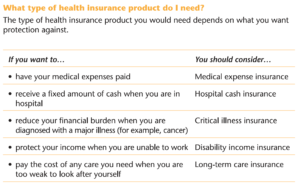
– because of life’s uncertainties, you can never predict what kind of curve ball life throws at you. It could be an accident, a serious illness, disability or death. Hence, the importance to secure comprehensive insurance coverage to protect against the various risks.

– for example, if one buys S$1mil in Death only cover but is afflicted with a major illness that requires significant medical cost. Resulting from this illness, one may not able to return to work and therefore loses income. Because there isn’t any cover for major illness or disability, not only is he unable to claim a single cent from his existing policy, he’s obligated to continue paying premiums…but his ability to fund the plan is already impaired due to his loss of income.

source: Guide to Health Insurance

Appropriate size
– this will depend on the size of fortress you plan to build which in turn depend on the number of loved ones and precious assets you plan to protect.
for example, a S$200k life insurance may be appropriate for a single person just starting work but no so for a married person with children, mortgage and a car.

Structural beams and walls
To hold up your fortress, it must be supported by strong beams and walls

In a financial plan, this is represented by Savings.

The ability is save is dependant on your ability to control your expenses which in turn is dependant on how you prioritise planning for your future over immediate gratification.

As your family grows and prosper, you will have to continually build and fortify your walls

Having adequate savings will allow you to

a) set aside 6 mths or more in contingency reserves
b) purchase your home and car
c) provide for your children’s tertiary education
d) build your retirement nest egg

Roof

A fortress ain’t complete without it’s roof

In a financial plan, this is represented by Investments.

To protect against natural elements such as sun, rain, hail and snow, a roof needs to be properly designed.

Similarly, Investments comes with risk and needs to be properly structured such that it’s in sync with your risk appetite whilst being able to meet your investment objective at the same time

Hire an Architect/Builder

The above concept is probably easy to understand so what will you do next? build your fortress yourself or hire an architect and builder?

As with financial plans, you can already buy insurances and investments online, at a slightly lower cost but at the expense of much of your time and you may muddle through the process due to lack of expertise.

Successful people understand that their expertise lies in their career and their time is valuable. Hence, it’s actually more economical to hire a professional financial adviser to help design the right specifications for their financial plan and assemble the appropriate financial tools so as to help them achieve their life’s financial goals.

Without proper guidance, the propensity to buy what you like to buy instead of focusing on what you need is high – that’s where things will go wrong!

For example, there’s a high tendency to buy savings and investment products when in fact, insurance is a higher priority. Striking the right balance is key. Moreover, our financial needs evolve as we move through different life stages, and our financial plans should be adjusted accordingly to remain relevant.

Other weak links

If you have followed all the above steps in building your financial plan, that’s well and good.

However, your loves ones (parents and family members) may not have benefited from the same advisory process and may therefore ended up with a less than appropriate financial plan. Should their plan ‘fail’, you might be forced to downgrade your fortress to save them.

For example, should a family member fall seriously ill and do not have an appropriate plan to address this need, who do you think they will turn to for financial support?

Another example is when your parents retire and lack the funds for their ongoing expenses. Increasing longevity is a major concern and one may underestimate the amount of funds required at retirement. By the time one realizes it, it’s probably too late.

Hence, it’s important that every family member is equipped with a sound financial plan so that they will not become a financial burden to their loved ones.

Hope the above was beneficial. To meet up for a discussion, just send me a note on the form on the right, and we’ll get in touch soon.

Finding the weak links is exactly what a structured financial planning process is designed to do. Not sure where you stand? Try the free Financial Clarity Session.

From Flab to Fab

A financial review in Singapore works a lot like a fitness check-in — uncomfortable to start, but you can’t fix what you haven’t measured.

Have you outgrown your clothes and dread the feeling of buying bigger sizes?

Have you been eating more and exercising less?

Planning to go on a diet or exercise program?

Yes, I’m sure some of us have experienced the above…while a few have done something about it, others are still procrastinating…that’s understandable as it takes tremendous motivation, discipline and effort to stick to a fitness regime to get back into shape.

For those who have gone ahead to improve their physical health, well done and do keep it up lest muscle atrophy set in again.

For the others, buying a gym membership and not using it or having the mindset of “perhaps tomorrow” will be cold comfort and will unfortunately not propel you to where you want to be, wouldn’t you agree?


So what has the above got to do with financial planning?

Just like exercising to get fit, your financial plans need to be regularly updated to fit your current lifestyle and financial needs. Also, being disciplined in carrying out the plan mapped out by your financial adviser will certainly help in meeting your financial goals.

for example, as you grow from an individual with single needs to marriage and to starting a family, your financial needs will change in tandem and it’s best to update your plans to protect your interest and those of your loved ones.

Not having your financial plans updated will be akin to wearing clothes when you were in your teens. Most will probably not fit you anymore nor the style….not cool.

But some of you may say “Gilbert, it takes so much effort and financial resources to  get things done which is why I prefer to procrastinate“.

Well, I can appreciate that but procrastinate for how much longer?

How will that improve your situation by doing nothing in the meantime?

What happens if you realize that you need to file a claim and have cold sweat not knowing whether you have a plan that insures the event or that can cover it adequately?

Soon approaching your retirement age and finding out that you don’t have enough time to grow your retirement nest egg?

Realizing your investment portfolio has taken a hit during a market downturn as you didn’t respond to your adviser’s recommendation to rebalance your portfolio.

All of us have the same 24 hours of time and limited financial resources, thus how we prioritise these resources to better our future will separate the have and have-nots. Which segment would you like to belong to?

To get started on your financial fitness program, hire a financial coach today (yours truly at your service)!

“Most people do not plan to fail but simply fail to plan” It’s a personal choice. Take charge of your financial life TODAY!!


Children and their financial impact on us

The cost of raising a child in Singapore is one of those numbers that’s genuinely useful to see broken down — a couple of the better breakdowns are linked below.

Just came across a few interesting articles and thought of sharing with you all

http://www.greatdeals.com.sg/2012/09/26/infographic-cost-of-a-child/

http://dollarsandsense.sg/the-cost-of-raising-a-child-in-singapore-explained-for-the-average-singaporean/

http://www.sgmoneymatters.com/much-cost-raise-child-singapore/

Starting a family in Singapore and bringing up your children entails much financial responsibility and the best way forward to secure your child’s financial future without breaking the bank is by starting with making the right financial choices.

If you’re keen to explore how you can give your children a head start in life without breaking your retirement nest egg, just  connect with me on the right and we’ll get in touch soon.

Live life to the Fullest, without Regrets!

Can you afford to Procrastinate?

CPF protection schemes in Singapore are mostly opt-out by design — a not-so-subtle hint about how much the government trusts us to plan for ourselves.

Have you wondered why

1. our govt came up with CPF, dependant protection, home protection schemes & CPF Life?

2. newborns are automatically covered upon birth under Medishield?

3. Medishield Life will be made compulsory?

4. Eldershield is an opt-out rather than an opt-in plan?

5. motor insurance is a pre-requisite to car ownership?

6. maid insurance is a pre-requisite to hiring a maid?

7. home insurance is a pre-requisite to taking up a bank loan?

The above measures are meant to provide basic protection and accumulation of wealth for retirement so why must our govt step in to legislate these requirements? Won’t we be able to do these ourselves?

Sadly for the majority, if left to our own devices, will either not know what’s required to be done OR be in denial and refuse to do it OR understand that it has to be done but procrastinate on it.

I mean, who likes to put money into insurance or think about unfortunate events that can potentially befall on themselves and their family? or lock up significant amounts of money to save up for retirement when this money can bring immediate satisfaction and enjoyment now by buying the material things we so desire?

Well, that’s why our govt has to play the role to set the minimum basic requirements…but if you allow the govt to be your financial planner, then I’m afraid what you’ll end up with will be very basic benefits. Our Govt now has plans to raise the employment age and introduced reverse mortgages for asset rich, cash tight citizens….would you like to sign up for that?

financial_advise-singapore

Our Financial Attitude

By conventional wisdom, here’s most people’s financial equation

Income – Expenses (Living + House + car) = Savings, of which a small portion can be deployed for financial planning

For the financially successful, their financial equation may be

Income – amt set aside for financial planning = Expenses (Living + House + car)

The difference between both equations is in how much financial planning is prioritized (valued) over current lifestyle choices.

Which financial equation would you like to employ in your life?

finance_singapore

Undeniably, our attitude towards financial planning is the single most facilitator or obstacle in achieving our financial goals.

Let’s examine further

At your workplace, would you prefer to work with an employer who looks after your welfare by providing you adequate employee benefits and a pension plan for your retirement? I’m sure you would.

In a similar fashion as the head of the household, how should you be taking care of your dependent’s (spouse and children) financial needs and aspirations so that they too feel loved and cared by you?

Again at the workplace, are you rewarded for anticipating problems and designing preemptive solutions to address them, meeting KPIs and deadlines on your projects? I’m sure you are.

In a similar fashion as the head of the household, there could be a lack of accountability or financial reward to carry out your responsibilities. Hence, do you chose to procrastinate or deny the need to plan financially or should you take proactive steps to secure the financial plans to address your family’s protection, child education and retirement needs? If you don’t take the lead, who will?

Why not employ the same work attitude that has made you successful in your career, into your family’s financial plan as well? Then you’ll be truly successful – holistically.

health-insurance_singapore

Cost of Procrastination

A. On insurance protection
Life-insurance_singapore

Would you prefer to pay pennies now, or dollars later?

B. On Wealth accumulation (Child education & retirement)

Wealth_management_singapore

The above is neither a religion that you have to believe in nor science fiction but rather realities that we face in life. The sooner we step up to the plate, the better it will be for you and your loved ones.

Hope the above was useful. To get in touch, just send me an email on the right and we’ll get in touch soon.

Till then…
Live life to the Fullest, without Regrets!

https://youtu.be/m82gm0Ln_EQ

Procrastination is expensive in compounding terms too — I have put numbers to it in Do you have TIME? Not sure where you stand? Try the free Financial Clarity Session.